My more current work was made slightly before I had an enlarger, and its only since I’ve had my enlarger that I learnt a certain quality of negative is needed to print properly, of which I’ve only taken two dozen, and only 2 negatives where really good, damn it.
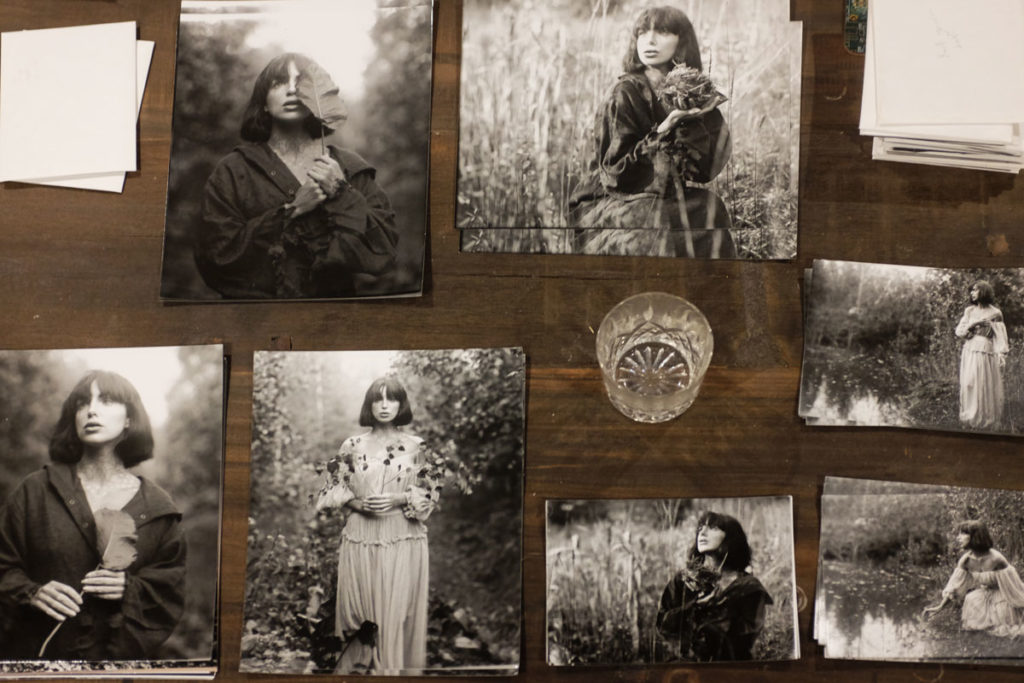
Something has to be done to fix this disaster and I have only one plan. I have read a few times about the 100 prints project. I want to find 100 of my best images and print them all in a cohesive manner. All printed to the best of my ability, toned and matted. For many reasons, this will be a challenge for me! I am not convinced I have 100 printable gelatin dryplates, never mind 100 great negatives. However, I will persevere to print as many as I can over the next few weeks.
]]>Since I started shooting gelatin dry plates I have noticed the contrast is fairly high. Unfortunately I have only recently starting printing with a darkroom enlarger so my awareness of what a perfect negative for printing looks like still needs some fine tuning. I have decided to test each batch of plates to ensure I know what light meter reading to use. Now that Ive started densitometry testing of my GDP’s ive become aware of just how dense and contrasty they actually are.
The first test I made to determine their speed I based upon Ansel Adams film testing procedures. I altered the test so I could get a range of test exposures onto one plate instead of a dozen plates. Technically this isn’t recommended as you create a series of density steps created by multiple exposures but life too short to care. Photosensitive materials may behave differently from 2 one second exposures versus a two second exposure. I took a photograph of a large Lastolite grey card and then placed it onto Zone 1 of Ansel Adams zone system. I then left a part of the plate without exposure to determine the base fog and exposed shots for iso 6,3,2,1.5. I then developed and fixed the plates. After drying I read the densities of these steps with a densitometer. This seemed to suggest my latest batch of plates where ISO 2 with the third step with exposure showing 0.10 density above glass base + fog.
 The image above has been manipulated in Photoshop to clearly show the density steps
Once I had determined my plates where ISO 2 I then took some exposures of the grey card placed on zone 8 and then developed the plate for my usual time. Once processed and dried this plate had a densitometer reading of 2.5 above film base + fog when ideally it should be 1.3, Bollox!. Generally 5 mins is the minimum recommended development time for even development. For the next test I decided to try Hc110 1.5% for 8 mins and 5 mins opting to change dilution instead of a shorter dev. Its recommend that 5ml of HC110 is the minimum recommended volume so I had to use more water than usual to ensure I had the min developer volume. The 8 min development came out at a density reading of 1.9 and 5 mins 1.2. I decided for now 6 mins will probably be good enough estimated ideal dev time. As my testing methodology improves later I am sure I will begin to get more accurate assumptions.
 Checking a plate developed for Zone 8 to see it comes close to a reading of 1.3
After this week of testing I have now started to realise just how super contrasty my negatives where with my old development process. Before going too far and assuming too much it is best to start taking some real world photographs and see how they behave once printed with my enlarger setup. I took some still life images in the garden and sketched out a reference image with zone system reading indicated on the image. I then photographed the scene and checked to see if the corresponding density values matched the spot meter readings obtained.


The exposure I needed was about 2 seconds. Past about 1/2 second reciprocity failure may come into effect. I was once told with exposures above 1 second, double the time. Whilst this seems terribly generalised I decided to do a 4 second exposure too. Its worth pointing out that GDP’s are sensitive to UV light only so the meter readings from a light meter which takes into account the full spectrum of light may not indicate the correct amount of light in pure UV terms. It is possible that a photograph taken in the shade may need more exposure than the meter is indicating versus a meter reading in full sun which may need no compensation.
The prints above where made at 5.5 seconds F16 which is the time it takes to print through a clear glass negative and obtain a maximum black on the paper. The image with the extra exposure on the right corresponds better to the image I had metered. The shadows under the chin of the stone man being where I placed them to be on about zone 4. Im hoping the extra exposure was needed because of recipriority failure and not pointing to the fact my plates may be ISO 1 and not ISO 2 which I calculated in a more technical set of tests.
Going forward I feel my GDP’s are developing too fast and I may need to investigate what’s causing that however for the sake of getting out there and making images I am quite happy to use a dilute developer. My process is developing better images than ever before and I was often very happy with the results these less than ideal plates produced.
]]>
I find this more so even with artists who claim to just follow their own visions and taste. Their book selection seems to oust them and reveal a great breadth of intellectualising has shaped their vision.
I’m not a great intellectual but I’ve read a few books on this subject of beauty. It’s hard, it’s boring, they’re a struggle to read. I can only seem to grasp the essence of it but never fully understand it.
Here’s my understanding.
On an unconscious level we are all coming to terms that the world is chaos, little meaning and order. Images that add order and coherence to this chaos help us to come to terms with this realization.
Images that pull back, reveal even more possible chaos and give shape and coherence to all these elements, giving form to the formless can have greater meaning.
In relation to this argument, artwork that appears to give this unity of form with the *appearance* of effortlessness gives truth to our hope that the world can be beautiful. With trickery or force, once we see it, it breaks the bonds of truth. The world is no longer ordered and beautiful as strain is needed to make it so.
I believe there are exceptions but by and large most great portraits of cultural significance are around 50mm lens and shot at eye level. With an apparent economy of means.

And then finally, form, texture pattern, it’s essentially decoration. Can simple decoration be elevated to the heights of beauty? No matter how hard we abstract our images the reality of their subject matter still exists. When the subject matter deals with the human condition, what it is to be human, its status is elevated.
The subject is just theories, many separate competing theories. It goes deeper, like why some music speaks of great sadness of the human condition but sound is more an abstract form.
On a closing note aesthetic theory has often been shooed away from the artists studio, it can bog you down, cripple your vision with overthinking and self imposed constraints. There’s also many exceptions to disprove the rules. I happen to agree but I never forget, for many a super creative artist out there, I’ve seen their bookshelf and they’ve read about it at least and come to terms with it in their own way.
]]>